Impact Factor




Theranostics 2026; 16(16):9557-9558. doi:10.7150/thno.142919 This issue Cite
Erratum
FAK signaling suppression by OCT4-ITGA6 mediates the effectively removal of residual pluripotent stem cells and enhances application safety: Erratum
Wenpeng Song1, Jian Wang4, Shixin Gong4, Xiaoyan Wang1,5, Junji Xu6, Ruiqing Wu1, Zongmin Jiang4, Huiyuan Zhang4, Lida Wu4, Yilong Wang5,7, Yingying Su1  , Hao Wang1 , Yuchun Gu2,3,4
1. Department of Stomatology, Beijing Tiantan Hospital, Capital Medical University, Beijing, China.
2. Translational Medicine Research Group (TMRG), Aston Medical School, Aston University, Birmingham, UK.
3. Molecular Pharmacology Laboratory, Institute of Molecular Medicine, Peking University, Beijing, China.
4. Research and Development Department, Allife Medicine Inc., Beijing, China.
5. Beijing Laboratory of Oral Health, Capital Medical University School of Stomatology, Beijing, China.
6. College of Stomatology, Chongqing Medical University, Chongqing, China.
7. Department of Neurology, Beijing Tiantan Hospital, Capital Medical University, Beijing, China.
Published 2026-11-2
Corrected-article in Theranostics, Volume 15, 7127
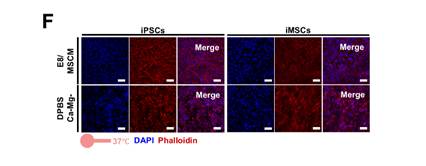
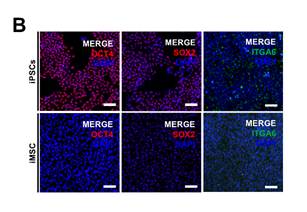
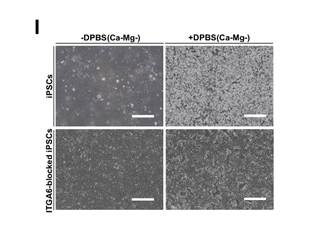
The authors regret that the original version of our manuscript contained several inadvertent errors regarding the representative images in Figures 1, 5, and 8. In Figure 1F, some images of iMSCs treated with DPBS (Ca-Mg-) at 37°C were not replaced as intended during figure preparation, resulting in the inadvertent use of incorrect images. In addition, due to an oversight during figure assembly, the fluorescence images in Figure 5 illustrating the differential expression of OCT4 between iPSCs and iMSCs were displayed incorrectly. Furthermore, Figures 7H and 8I represent the same treatment of the same cell type, and the corresponding images were inadvertently duplicated, which may have caused confusion in the interpretation of the figures. We therefore request replacement of the images in Figure 8I. The corrected versions of Figures 1, 5, and 8 are shown below. The authors confirm that the corrections made in this erratum do not affect the original conclusions. The authors apologize for any inconvenience or misunderstanding that these errors may have caused.
Corrected Figure 1F.
Corrected Figure 5B.
Corrected Figure 8I.
Author contact
Corresponding authors: Yuchun Gu (Email: ycguedu.cn), Hao Wang (Email: Hao_Wang2022com) and YingYing Su (Email: reliayysucom).